Understanding Research Peptides
This educational content is provided for academic and research-context purposes only. It does not constitute medical advice, dosing guidance, All ALPHA+ products are for research use only.
What Are Peptides?
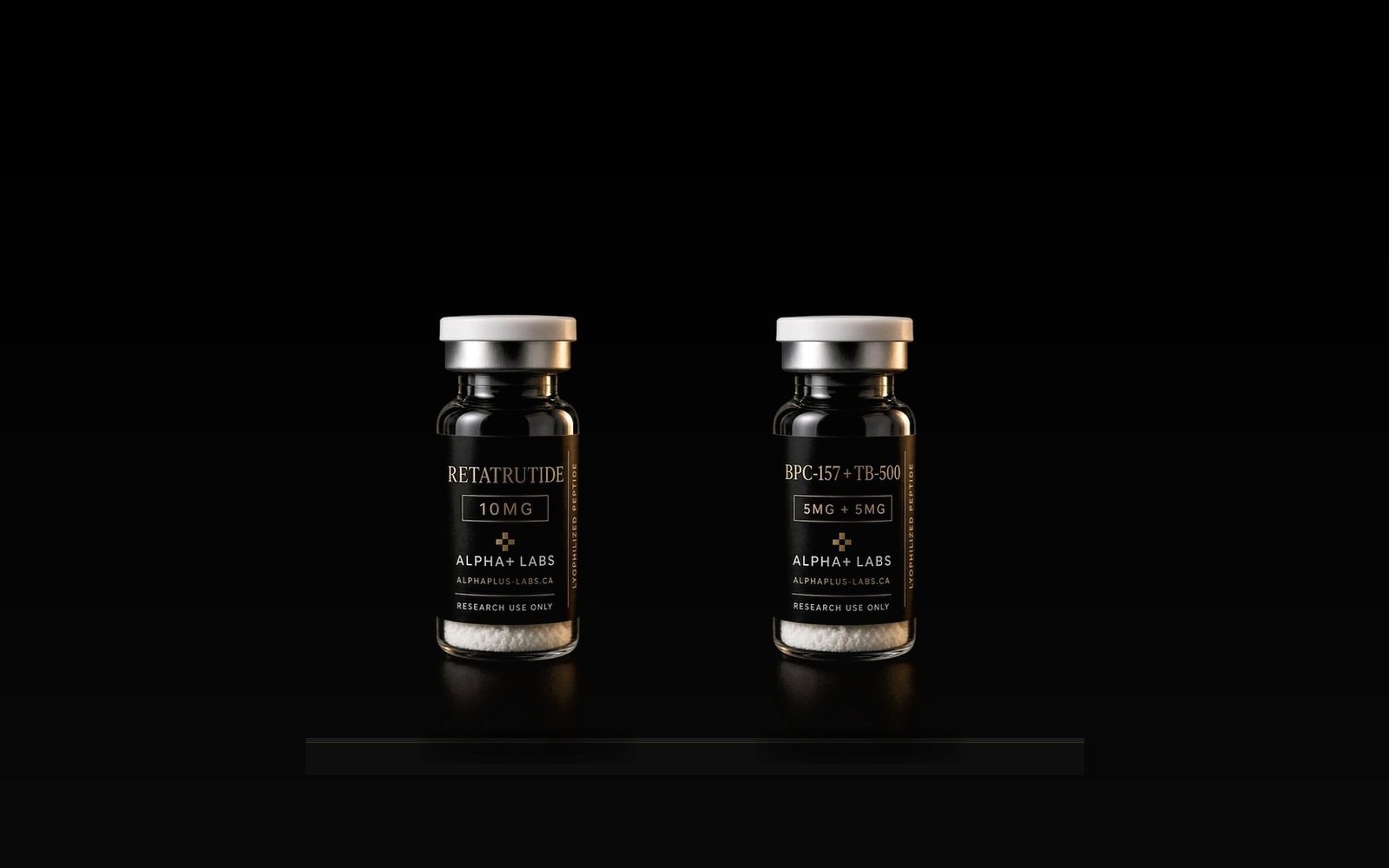
Peptides are short chains of amino acids linked by peptide bonds. They occur naturally in biological systems as signalling molecules. Synthetic peptides are produced in laboratories to enable researchers to study these signalling pathways in controlled in-vitro environments. The peptides supplied by ALPHA+ are synthesised for laboratory research applications.
Purity & Quality Standards
Research-grade peptides are evaluated on purity, typically verified by High-Performance Liquid Chromatography (HPLC) and Mass Spectrometry (MS). ALPHA+ compounds are sourced from GMP-certified facilities and meet a ≥98% purity standard. Certificate of Analysis (COA) documentation is available for all products, providing batch-specific verification data.
Understanding a Certificate of Analysis (COA)
A COA is a document provided by an analytical laboratory that confirms the identity and purity of a compound. Key elements include the HPLC chromatogram (showing purity percentage), mass spectrometry data (confirming molecular weight), and batch or lot identification. When evaluating any research supplier, batch-specific COAs are the standard for verifying research-grade quality.
Storage & Handling in the Lab
Lyophilised (freeze-dried) peptides are generally stored frozen and remain stable for extended periods when kept at appropriate temperatures. Once reconstituted with bacteriostatic water, peptide solutions are typically refrigerated. Proper handling in a laboratory setting preserves compound integrity for research applications.
Reconstitution for Laboratory Use
Lyophilised research peptides are supplied as a powder and reconstituted with bacteriostatic water for laboratory analysis. Researchers can prepare solutions at specific concentrations using standard reconstitution mathematics for research record-keeping. Bacteriostatic water is available separately.
Bacteriostatic Water
Bacteriostatic water is sterile water containing 0.9% benzyl alcohol, which inhibits bacterial growth. In a research context, it is used as a diluent for reconstituting lyophilised compounds. It is required for the laboratory preparation of powdered research peptides.
All content on this page is for educational and research-context purposes only. ALPHA+ makes no therapeutic or medical claims. Products are for in-vitro laboratory research use only and are sold for research use only. Researchers are responsible for compliance with all applicable regulations.